Designing Defense Technology for Production, Not Just Prototypes
A look at why defense technology needs to be designed for repeatable production, not just successful prototypes.
The prototype works. That was never the hard part.
Walk any defense trade show floor and you will see plenty of technology that works. Sensors detect. Drones fly. Systems do what the demo says they are supposed to do.
The harder question is what happens when someone wants 1,000 of them.
A lot of good defense technology never gets fielded at a meaningful scale. Not because the prototype failed, but because the company behind it was built to develop the product, not manufacture it. Getting something to work and being able to make it repeatably, quickly, and in quantity are very different problems.
A prototype and a production unit are not the same thing
When you are building the first few units, you can get away with things that simply do not work at scale.
An engineer can calibrate each unit by hand. You can buy a component wherever you can find it. Someone on the team knows the weird trick that gets a particular assembly working. If something takes an extra two hours, it takes an extra two hours.
None of that is necessarily a problem when you are trying to prove the technology.
It becomes a very big problem when an order for hundreds or thousands arrives.
Now the calibration process needs to be repeatable. Components need reliable sources. Assembly time matters. Test procedures matter. Yield matters. And the process needs to work without depending on the engineer who designed the original system standing next to every unit.
Production exposes decisions that a prototype can hide.
That is why designing something for production needs to start much earlier than most companies think.
More funding does not automatically solve production
There is substantially more capital going into defense technology today, and a growing amount of it is going toward manufacturing capacity.
That makes sense. Factories, equipment, inventory, and people all cost money.
But funding alone does not make a product scalable.
If your design depends on a component with a long lead time, more money does not necessarily make that component appear. If your production process depends on tribal knowledge, hiring twenty more people does not solve it. If a critical part of the system comes from one constrained supplier, your production capacity is ultimately tied to theirs.
Money can help increase capacity. It cannot fix every decision that was made before anyone thought seriously about production.
The compute problem
We see this becoming especially important in sensing and autonomy.
It is tempting to build around the most powerful processor available. It gives the engineering team plenty of headroom, speeds up development, and can make getting to the first demonstration much easier.
But there is a tradeoff.
If that same compute is in high demand across defense, AI, automotive, and commercial markets, it can become one of the hardest parts of the product to source at volume. Suddenly the number of systems you can build has less to do with your own manufacturing capacity and more to do with another company's allocation and lead times.
That is a dangerous place to be when a customer needs quantity quickly.
Sometimes the better engineering decision is to solve a harder problem up front: figure out how to get the performance you need from components that are available, affordable, and realistic to source at scale.
The best component for a prototype is not always the best component for a product.
What designing for scale actually looks like
There is not one trick to scaling production. Most of it comes down to decisions that are not particularly exciting.
- Use components you can reliably source.
- Control the manufacturing processes that are critical to your product.
- Design tests and calibration procedures that can be repeated without the original engineering team.
- Document how things are built.
- Make the architecture flexible enough that every new customer requirement does not require starting over.
That last one matters more than it might seem.
Defense requirements change. A customer may need a different frequency range, sensor, processing capability, or mission configuration. If every variation requires a new hardware design, you are effectively creating another product and another production problem each time.
A modular architecture lets you change what the system does without rebuilding everything underneath it.
Buyers should look past the demonstration
A successful demonstration tells you the technology works. It does not tell you whether the company can deliver it at scale.
There are a few questions that get at that pretty quickly.
- Where do the critical components come from?
- What happens if the order is ten times larger than the last one?
- Which parts does the company manufacture or control itself?
- What is the actual production rate today?
- Which steps still require an engineer to touch every unit?
- How much of the design has to change when the requirement changes?
Those questions are not as interesting as maximum detection range or processing performance, but they can matter just as much when it comes time to field something.
How we think about it at Radenso Labs
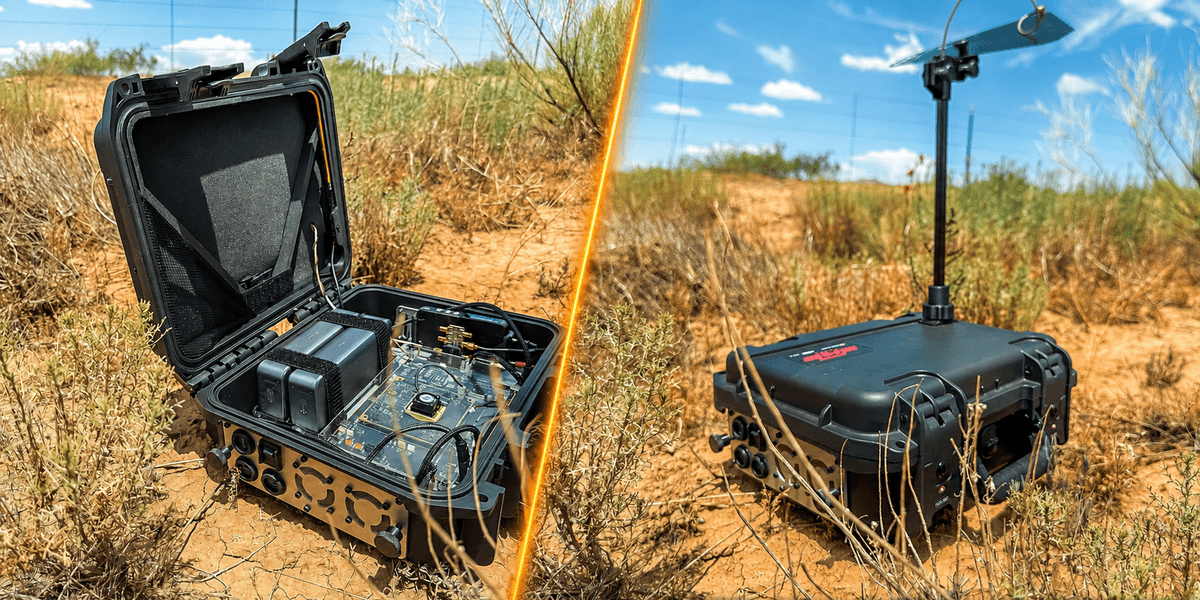
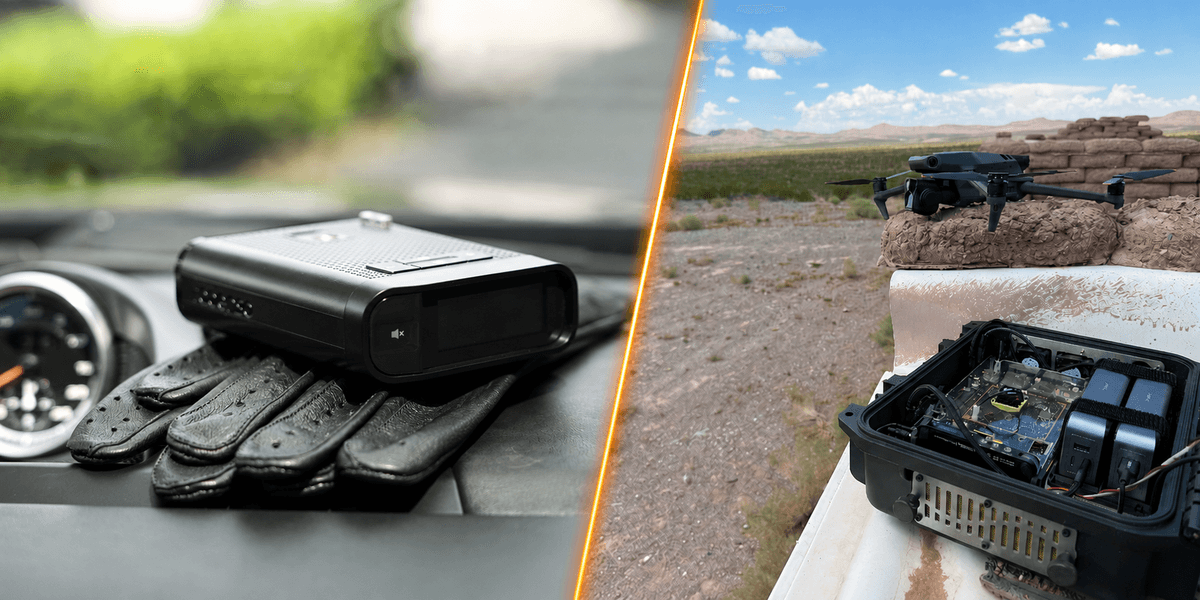
This has shaped how we have built Samplebeast from the beginning.
We did not want to build a system that was impressive as a prototype but painful to manufacture. That meant making some engineering decisions that were harder up front because they made more sense if we eventually needed to produce the system in quantity.
We use a vertically integrated manufacturing approach so we have more control over the parts of the system that determine our production capacity. We have also worked to avoid building the platform around scarce third-party compute that could eventually dictate how many systems we are able to make.
The same thinking went into Samplebeast's modular architecture. Different capabilities can be added through interchangeable hardware rather than redesigning the core system every time the requirement changes. That lets the platform evolve without creating an entirely new manufacturing problem with every new mission.
None of this is as exciting to demonstrate as detecting something at long range. But if the goal is to put real capability in the hands of the people who need it, it matters just as much.
A prototype proves that the technology works.
Production proves that the company can actually deliver it.
We have tried to design for both.